

Oh 2 year olds. Arguably the most adorable age but it can also be a time where even the best of sleepers experience a regression. Whether it’s limit testing, transitioning to a bed too early, early wakings, trouble falling asleep at bedtime – all of these issues can crop up seemingly out of nowhere but now with a blooming vocabulary that can make setting boundaries around sleep even more challenging. This blog post is meant to answer all of those sleep questions that tired parents are googling – is there a 2 year sleep regression? Can you sleep train a 2 year old? Should I move my 2 year old to a bed? How do you potty train and sleep train? What is the 2 year nap strike? Read on for these answers and more!
2 YEAR OLD SLEEP – the age of limit testing
Sleep Needs [nap + nighttime]
Average Sleep Needs: 12-12.5 hours
Low Sleep Needs: 11.5 hours
High Sleep Needs: 13 hours
Schedule
At age 2, some adjustments to schedule are necessary due to a potential decrease in sleep needs and the need for more sleep pressure at naptime. Sleep issues can crop up if we get ‘stuck’ in a 1 year old schedule, and this can lead to early wakeups, trouble settling at bedtime, nap refusals, and then inevitably wakings at night due to overtiredness.
For the 2 year old crowd, we are looking for:
At least 6 hours of awake time before the nap
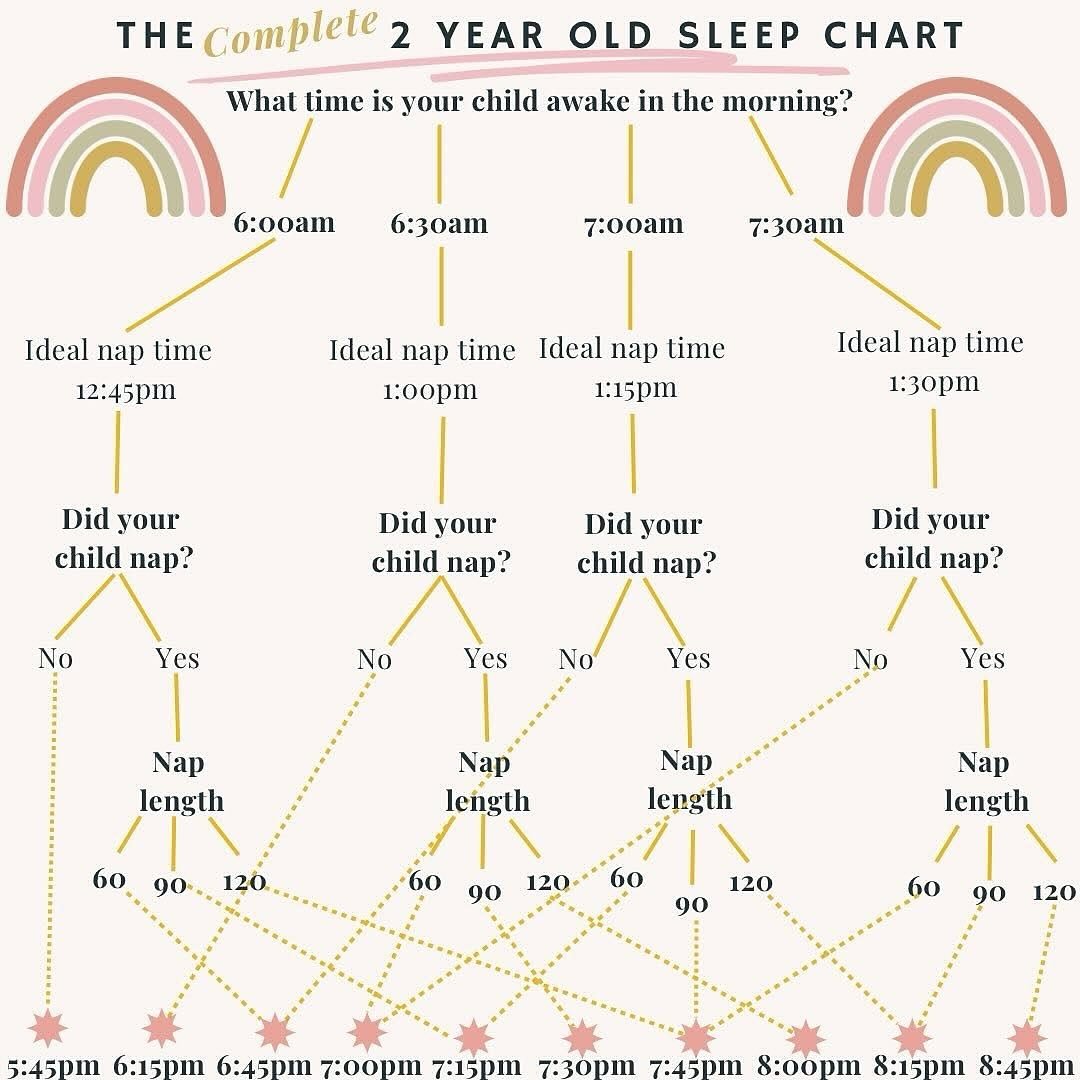
A nap put down no earlier than 12:45pm [when this can be controlled, not always the case with daycare]
A nap between 1-2 hours in duration
Around 5 hours of waketime before bedtime
A morning wakeup time between 6:00-7:30am
A bedtime between 7:00-8:00pm
So what does this look like for each sleep needs kiddo?
Average sleep needs [let’s say 12.25 hours]:
6:30am – awake for the day
12:45pm – down for nap
1:00pm-2:30pm – nap
7:15pm – down for the night
7:30pm-8:15pm – asleep for the night
A 1.5 hour nap leaves 10.75 hours of sleep at night, so 7:45pm = 6:30am
Low sleep needs [11.5 hours]
6:00am – awake for the day
12:45pm – down for nap
1:00pm-2:00pm – nap
6:45pm – down for the night
7:00-7:45pm – asleep for the night
A 1 hour nap leaves 10.5 hours of sleep at night, so 7:30pm = 6:00am
High sleep needs [13 hours]
7:00am – awake for the day
12:45pm – down for nap
1:00pm-3:00pm – nap
7:45pm – down for the night
8:00pm-8:45pm – asleep for the night
A 2 hour nap leaves 11 hours at night, so 8:00pm = 7:00am
Common schedule issues
Early wakeups
The most common schedule causes of early wakeups at this age are:
A bedtime that is too early
Keep a sleep log for 2 weeks. Is your child clocking enough sleep [somewhere between 11.5-12.5 hours depending on low/average sleep needs] but they are just waking too early? Nap and bedtime [or just bedtime] may need to be shifted.
Shift the nap later if your 2 year old is already awake ~ 5 hours between nap and bedtime [as this is typically the maximum awake time until 3+ years of age, so better to shift the nap and keep bedtime 5 hours from the nap, which then becomes later due to the nap shifting later] to get bedtime later vs. exceeding a 5 hour waketime.
Shift the bedtime only if your 2 year old is awake less than 5 hours right now OR if you don’t have flexibility with the nap timing due to daycare.
A nap that is too long
If your 2 year old is napping longer than 2 hours and waking up early in the morning,
step 1 is capping the nap to a maximum of 2 hours. It’s also ideal that the nap is finished by 3:00pm to maintain a decent bedtime.
A bedtime that is too late
Another good reason to keep a sleep log is to troubleshoot a too-late bedtime. If your
2 year old is waking early and not clocking enough sleep [less than 11.5 hours] then looking at whether bedtime is too late is the next step [especially if they tend to wake unhappy in the morning, seem tired through the morning/evening, and/or are experiencing nightwakings, sleep-cries, etc.]
First look at the awake time before bedtime, does it exceed 5 hours? If so, pull it back, and aim to lay them down 4.75 hours after the nap ends [‘to be asleep’ by 5 hours]. Do they have a nap running too late in the day [past 3:00pm]? If so, cap the nap to preserve an earlier bedtime.
Next step is looking at nap duration – some toddlers will struggle to sleep a full night with a nap that is too long for them. Doing a bit of trial and error with nap durations to find a ‘sweet spot’ where your 2 year old is clocking at least 10 hours of sleep at night is important [a nap is important, but nighttime sleep is far superior!] Give each nap duration a full 3 day trial before trying to reduce it further. I would aim to not go shorter than an hour, but anywhere between 1-2 hours is age-appropriate.
On top of these schedule causes, early wakeups can also be a result of:
A lack of independent sleep [not falling asleep on own at bedtime can make it difficult to stay asleep in the light sleep stage between 4-6am]
Parental reinforcement [if we are allowing toddlers to be up prior to 6:00am and expose them to light, stimulation [screens being the worst offenders!], food, etc. – we re-set their internal clocks and the early wakings will persist]
Trouble settling at bedtime
Just like with the early wakeups, there are a host of reasons why bedtime can become more challenging at this age, and the causes are very similar to the above early wakeup causes:
A nap that is too long
Yet again troubleshooting this issue that if your toddler is taking too-long of a nap, there may not be enough sleep pressure at bedtime to allow them to easily fall asleep. Especially if your toddler is napping longer than 2 hours [even if it was working well previously!] or past 3:00pm, capping it would be worth trying if bedtime is tricky.
A bedtime that is too late
Just like with babies, overtiredness can wreak havoc on a toddler’s sleep, and it can cause extra defiance through the bedtime routine and a rush of stress hormones that make it near-impossible to fall asleep. If bedtime has become challenging and they are awake much longer than 5 hours, try pulling it back and see if that helps.
A bedtime that is too early
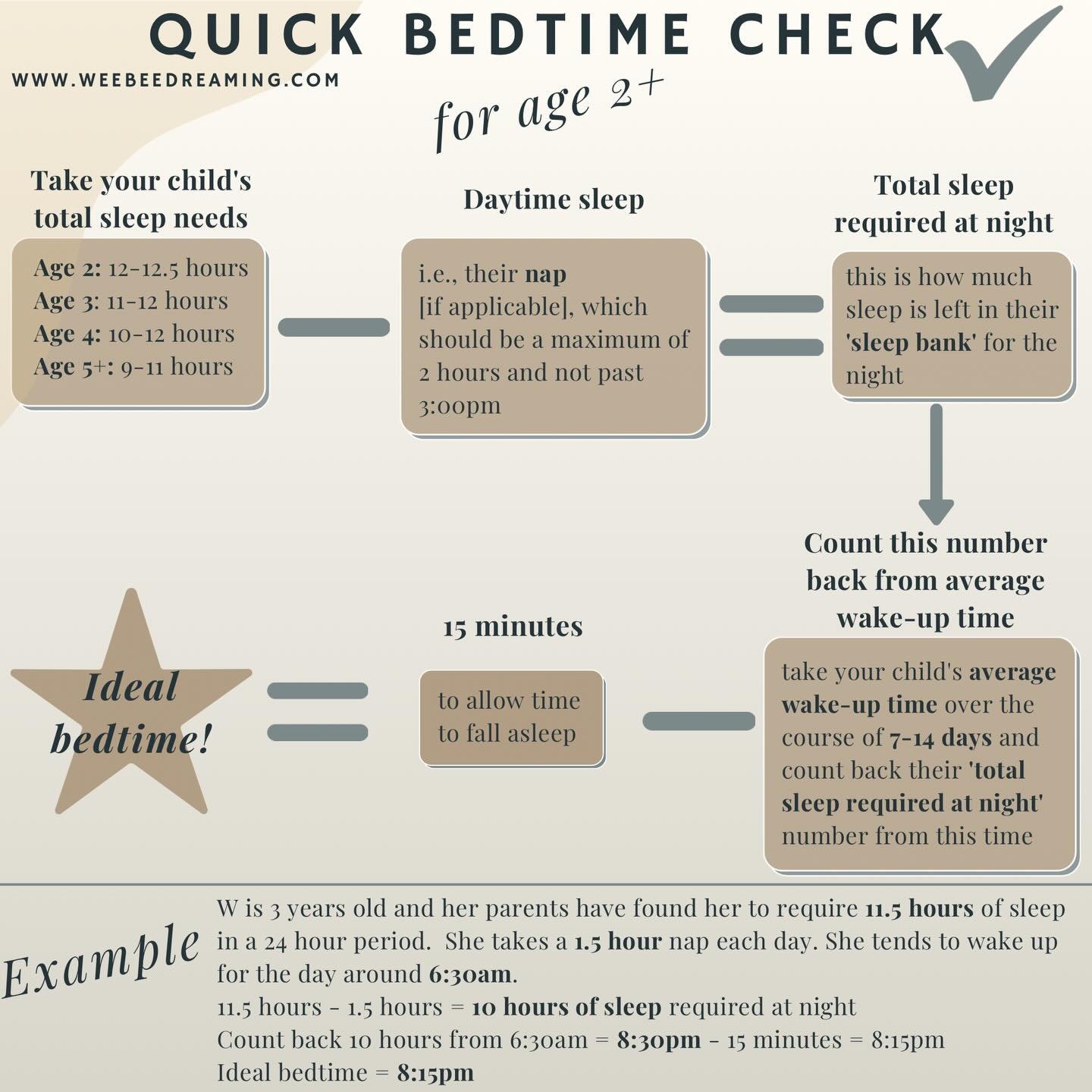
On the opposite end of the spectrum, a bedtime that is too early [meaning a lack of sleep pressure] can present challenges as well. Take a look at your toddler’s ‘total waketime’ through the day. This means the amount of time they are awake before their nap and the amount of time they are awake before bedtime. Add those numbers together and what do you get?
Average Sleep Needs: that number should be between 11.5-12 hours
Low Sleep Needs: that number should be around 12.5 hours
High sleep needs: that number should be around 11 hours
Why does that number matter? Because that is the amount of sleep we are expecting your child to sleep in a 24 hour period, and if that number is much higher than the amount of sleep they actually need, we may seem them struggling to fall asleep at bedtime, waking up in the middle of the night [to make up for a lack of daytime awake time!] or waking early in the morning.
So knowing that we want to stay at around 5 hours between nap and bedtime, that awake time before the nap needs to be:
Average sleep needs: between 6.5-7 hours
Low Sleep Needs: around 7.5 hours
High Sleep Needs: around 6 hours
So if you have an average sleep needs child that is waking at 7:00am and napping at 1:00pm [6 hours of waketime] and then struggling to fall asleep at bedtime, it can be as simple as adding an extra 30 minutes of awake time before the nap [1:30pm].
*Why not just add the time onto bedtime?*
While there needs to be a balance of awake time during the day, it’s a delicate balance to ensure that your toddler is not overtired at bedtime – this is the time of the day that is much more sensitive. In saying that, if you do have a lower sleep needs child, they may be able to handle a bedtime waketime longer than 5 hours, so if you’ve maxed out the awake time before the nap OR if you have a toddler in daycare where you don’t have control over the time of the nap, you may need to experiment with a slightly longer bedtime waketime to see if they can handle that.
READ THIS! My 2 year old is all of a sudden taking longer than the usual 15-20 minutes to fall asleep at bedtime, what gives?
If you have followed along with my blog long enough, you’ll know that my goal for ‘fall asleep time’ for babies is 20 minutes or less. One of the most important things that I can tell you about toddlers is that if you have a toddler who still naps, it is NORMAL for them to take up to an hour to fall asleep at bedtime, and that is OKAY! Now, if your toddler is not falling asleep on their own and you have to be present for that hour, that can be a major cause of frustration [and no, it is never too late to sleep train your 2 year old!] but if your child is falling asleep on their own, happily, and it is taking up to an hour, no adjustments to schedule are needed.
If your child is taking longer than an hour and/or is majorly protesting once they are down for the night, then I’d be troubleshooting a too-early/too late/some other schedule issue, as per above.
The 2 year nap strike
How many times have you heard a parent say that their child stopped napping at 2 years old? I know my own mom tells me that’s exactly what I did, but I also know that she had no clue about the 2 year nap strike, so let’s dive into that now:
It is normal for your 2 year old to skip naps, it does not mean they are done napping
92% of kids are still napping at age 3. 92%! That is a high number and it shows that the vast majority of 2 year olds still absolutely need a nap. Naps at this age are more than just a convenience factor for parents, they are a part of healthy development.
Nap Benefits
Brain Development & Learning
At age 2, the brain is growing incredibly fast. Naps help toddlers:
Consolidate new skills and memories
Improve language development
Support problem-solving and learning
Toddlers who nap tend to retain new information better than those who stay awake all day.
Better Mood & Emotional Regulation
You’ve all met an overtired toddler! Naps help toddlers:
Handle emotions better
Cope with transitions
Be more cooperative
A nap is like a “reset button” for behavior. Without a nap, cortisol [aka the stress hormone!] will rise, toddlers can get a second wind before bedtime, making going to bed more challenging, and the middle of the night can be a challenge due to the sleep debt that can accumulate.
So what do we do if your 2 year old starts skipping their nap?
Target schedule issues
Is your toddler getting enough awake time before their nap? Minimum of 6 hours? Potentially up to 7.5 hours?
Is your toddler sleeping in too late in the morning? Especially if they are waking past 7:00am, try waking them earlier to see if that helps increase sleep pressure before the nap.
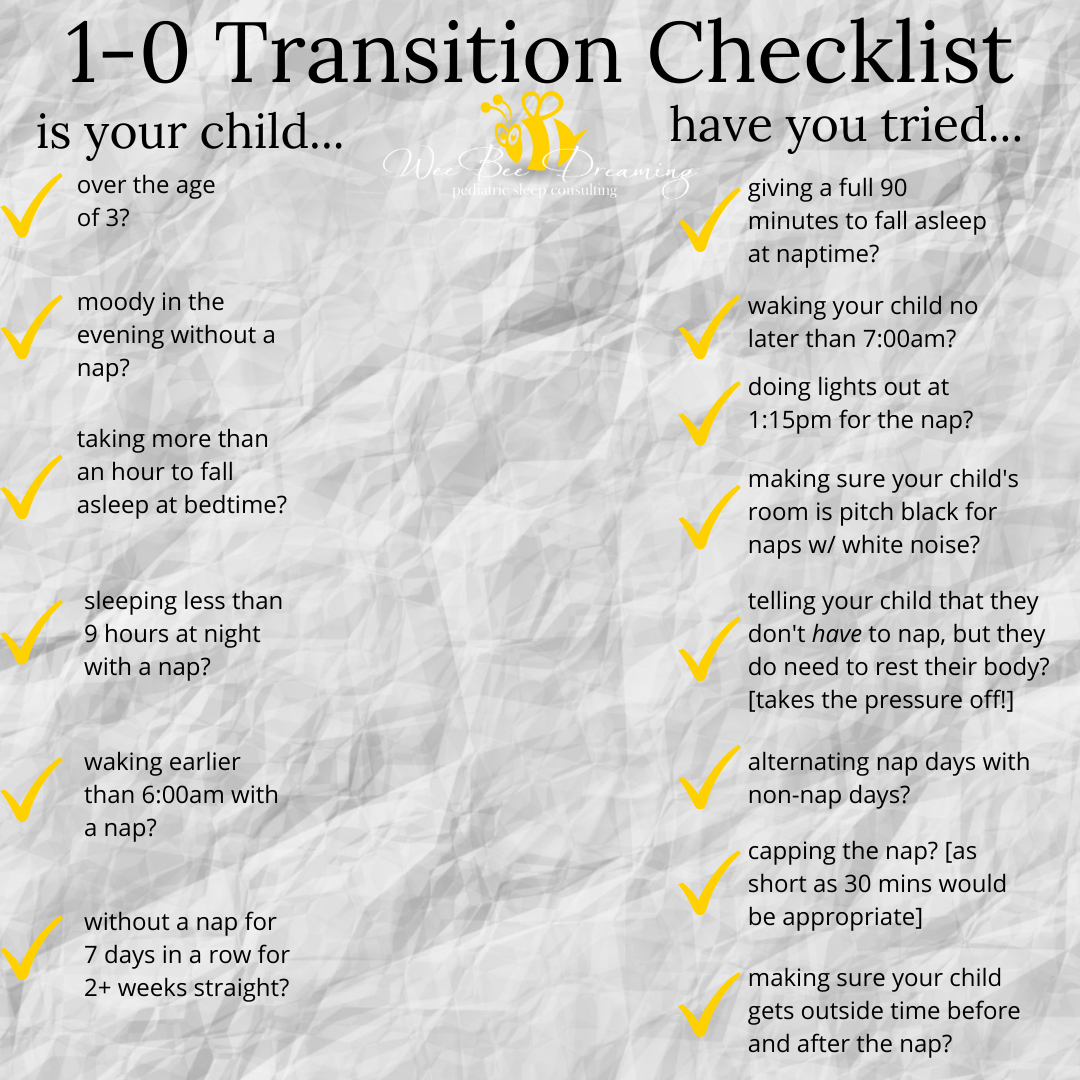
Are you giving up on the nap too quickly? Once you lay your child down for a nap, give them a full 90 minutes to try and fall asleep.
Is their sleep environment conducive to napping? Is their room pitch black for naptime? Are you using white noise? Have you tried changing them into their pyjamas before nap time?
Other things to try would be ensuring there is outside time before the nap and also taking the ‘pressure’ off the nap by telling them that they don’t need to sleep, but they do need to rest their brains/bodies.Don’t give up on the nap
It is highly uncommon for a 2 year old to just be done napping, and skipped naps don’t mean naps are gone. Make sure you try all of the above to troubleshoot schedule issues but keep offering that nap.
When Are They Ready to Drop the Nap?
Most children don’t drop naps until age 3–5 years of age.
Signs they’re not ready:
Meltdowns in the afternoon
Falling asleep in the car
Waking overnight or early
Bedtime is becoming more challenging
It hasn’t been 14 days in a row without a nap
So what do I do if my 2 year old is truly done napping?
If you’re in that 8% crowd, then there are a few important considerations to make when we have a young child that is finished napping:
Consider a quiet time
It is important, even if your child is done napping, that they have a chance each day to rest and recharge their batteries, and quiet time is the perfect opportunity for that.
Quiet Time Rules for Toddlers
Keep the timing fairly consistent. This reduces resistance.
Ideally quiet time occurs between 1:00-4:00pm each day. It is great to consider quiet time every day until your child starts full-time school.
Start short, then extend [it can take 1-2 weeks to adjust to quiet time]
Begin with 15–20 minutes
Gradually increase to 45–90 minutes
Use a visual timer so they can see when it endsEnsure you have boundaries around quiet time
Quiet time occurs in your child’s bedroom
Play calmly (no jumping, yelling, or rough play)
Consider quiet time bins [like these!] to keep it exciting
No electronics!
If they are leaving their room
This is normal at first, walk them back silently and consider doing frequent checks to praise them for staying in their room. Even a sticker chart or some reward can be a great incentive at first.
Bedtime needs to pull earlier
Remember, you are losing an entire sleep period and bedtime has to shift earlier to compensate for that. Essentially now that your toddler is not napping, they need to be getting all of the sleep they were previously getting between nap and nighttime all at night. So to figure out the ideal bedtime, you need to:
*take your child’s average sleep needs
*take your child’s average wakeup time
*count bedtime back from that
So for example, if your child was sleeping 12 hours each day [1 hour nap, 11 hours at night] and usually waking up at 7:00am, bedtime without a nap should be 7:00pm [lights out at 6:45pm].
Potty Training, Boundary Setting, and Sleep
When I think of the different factors that can contribute to what feels like a 2 year sleep regression, limit testing/boundary pushing is at the forefront, and there are essentially 3 main areas that a toddler can test limits [aka things that they can largely control]: meal times, sleep, and potty. 75% of parents begin potty training between 24-36 months of age, and if we don’t have clear boundaries and a ‘sleep-saving’ strategy for nighttime training, this milestone can impact sleep. Let’s look at why:
Boundary pushing with potty training
Toddlers push boundaries, it’s what they do. It’s a part of normal and healthy development to learn cause and effect. They are discovering independence and they are building their identity, separate from their parents. And boundaries are what make toddlers feel safe. Consistent limits tells them that the world is predictable and they are safe, and this applies to sleep as well. If the rules are muddled and boundaries are flexible, it can make toddlers feel out of control (“sometimes I sleep in my parents’ bed, sometimes my bed, sometimes I fall asleep on my own, sometimes my parent is there, when I wake up at night sometimes nobody comes, sometimes someone comes right away. When I ask to use the bathroom, sometimes I get to do it 3 times, sometimes my parent tells me no”). You can see how all of this can feel confusing and more confusion = more boundary pushing. It isn’t ‘mean’ to hold a boundary with your toddler, it’s necessary.
When it comes to boundary pushing with potty training, this will happen with almost every single toddler at bedtime. Picture this – you go through your bedtime routine, making sure the very last step is the potty. You tuck your toddler in, give them a kiss, turn out the light, and leave. Then all of a sudden a moment later, “Mom! I need to pee!” You don’t want to interfere with their newfound potty training skill so you get them out, take them pee [where they do manage to squeeze out a milliliter of pee!] back in bed. Twenty minutes later it’s the same thing, “Dad! I need to pee!” and the saga continues. This is where boundary setting with potty training becomes important. No you will not interfere with the potty training process by holding a boundary but you will be protecting their sleep, which is important. So while potty training is in its infancy, I’d make sure to:
Continue using a pull-up/nighttime diaper at nap and bedtime. Once you have
7 days in a row with a dry diaper at nap time, then switch to underwear. Once you have a dry diaper in the morning 7 nights in a row, switch to underwear.Decide your bedtime potty training boundary. Having the boundary is more important than what the boundary is. So you might decide to allow 1 visit, 2 visits, or if you’re like me, 0 visits. Holding the boundary is the most important part, so if your 1 visit is up, that’s it. You can tell them to use their diaper or hold it until the morning. Remember, this is just boundary pushing and it will not interfere with your potty training. If they just used the bathroom 20 minutes ago, their bladders haven’t magically refilled in that time to require another visit.
Consider a potty corner in their room. Have a small potty set-up with toilet paper, hand sanitizer, and anything else that they might need to use the toilet. Having the set up in the morning removes some of the ‘reward’ that comes from leaving my room, taking a little trip to the bathroom, lights turning on, etc.
The 7 day/night rule – why?
You may read in a potty training book that nighttime training is important to the potty training process. They might instruct you to wake your child up multiple times at night to take them pee to learn how to listen to their body’s signals. My question is… who wants to be waking up at night to take a kid pee?! Not me! Not you probably either! To protect sleep, we are much better off waiting until our kids have the physical ability to hold their bladder the entire night [which most kids can do at/around age 4] and then at that point, removing the nighttime diaper. In my personal and professional experience, this has never harmed daytime potty training and unless your doctor has recommended otherwise if extended bedwetting is becoming an issue, we are much better off waiting for this milestone and protecting nighttime sleep.
Nighttime dryness depends on:
Bladder capacity
Deep sleep patterns
Production of the hormone ADH (antidiuretic hormone), which slows urine production at night
Many toddlers simply don’t produce enough ADH yet. That’s not something you can “teach.”
Some important considerations to help kids hit this milestone quicker
The last milk of the night should be offered with dinner, and small amounts of water only after dinnertime. If your child is drinking a large glass/bottle of milk before bedtime, it will be very difficult to hold their pee the entire night. This is part of why I usually recommend removing ‘bedtime feeds’ around 10-12 months of age, and switching to a cup of milk with dinner instead. Working on your toddler getting the majority of their hydration between morning wakeup time and dinner is helpful to ensure more input does not = more output at night.
Make sure going pee is the very last step in your bedtime routine. Even if that means leaving the room again after reading books, etc. to use the bathroom, having it as the last step is a good strategy. You may even want to consider ‘double dipping’ – pee at the start of the routine and pee again at the end!
Consider a ‘dream pee’. This isn’t successful for all toddlers but if your child is over age 4 and still waking up wet, before you head to bed at night try lifting them out of bed onto the potty [having the potty in their room can be helpful for this!], allow them to go, and then return them back to bed again with as little stimulation as possible.
If your child is over 6/7 years old and still not staying dry, following up with your pediatrician is a good idea.
Boundary Testing and Losing Independent Sleep
I have found age 2 to be a notorious time for families to, very unfortunately, lose their child’s independent sleep skills. The main causes of this are typically:
Transitioning to a bed too early
Two-year-olds are simply not ready for the freedom that a bed allows for. Not only is it difficult for them to understand the imaginary boundaries of a bed, but they lack the necessary impulse control to follow through on the new rules that come with this freedom. The part of the brain responsible for impulse control and reasoning (the prefrontal cortex) is still very immature. So even if they know a rule, they can’t reliably stop themselves. They’re not thinking “I will now defy my parent.” It’s more like “I want that. I feel that. I do that.” So we can tell them all day long that the rule of their ‘big kid bed’ is to stay in it, but if they want to get out enough, they will. This then leads to them leaving their room, banging on the door, getting into trouble within their room and many parents resort to laying with them until they fall asleep, thinking that it will be temporary but – surprise – it’s not. Once a toddler knows that having a parent cuddle me to sleep is an option, that is going to become the expectation until you change it. And if you don’t mind laying with your child until they fall asleep every night – by all means! But it won’t likely take long until they are waking up at night also expecting that same help back to sleep, so it is a bit of a slippery slope towards reactive bedsharing, nightwakings, and other issues that you may not have been dealing with before. So we are much better off waiting until our kids are 3, 3.5, or even 4 years old before considering a bed. Think of how long you’d leave your child alone and unattended for, if the answer to that is ‘not very long’ then they are not likely ready for the freedom that a bed allows for.
Limit testing at bedtime.
This is the number one reason that I believe a 2 year old regression is suspected, and it’s that toddlers who were previously going to sleep without much fuss, have started to put up a fuss. This can sometimes be due to overtiredness [especially if they have started a 2 year nap strike!], looking for connection/their bucket to be filled, desiring control, and dabbling in negotiations [spoiler alert: we never negotiate with toddler terrorists!]
At night, separation anxiety will be at an all-time high. It’s been a long day, they are craving connection, and they know they are heading into a long night of being away from their favorite people. They can also be tired [which weakens impulse control!] and they are looking for a sense of control. So this devolves into limit testing – one more book, I’m thirsty, one more song, I need to go to the bathroom, I’m scared, I need a hug – can you relate? This is your toddler checking their boundaries, just to make sure they still stick. If they don’t? They will push, push, push. If they do? They protest, they push, then they don’t push, then they don’t protest. So in order to ensure we can keep bedtime running smoothly:
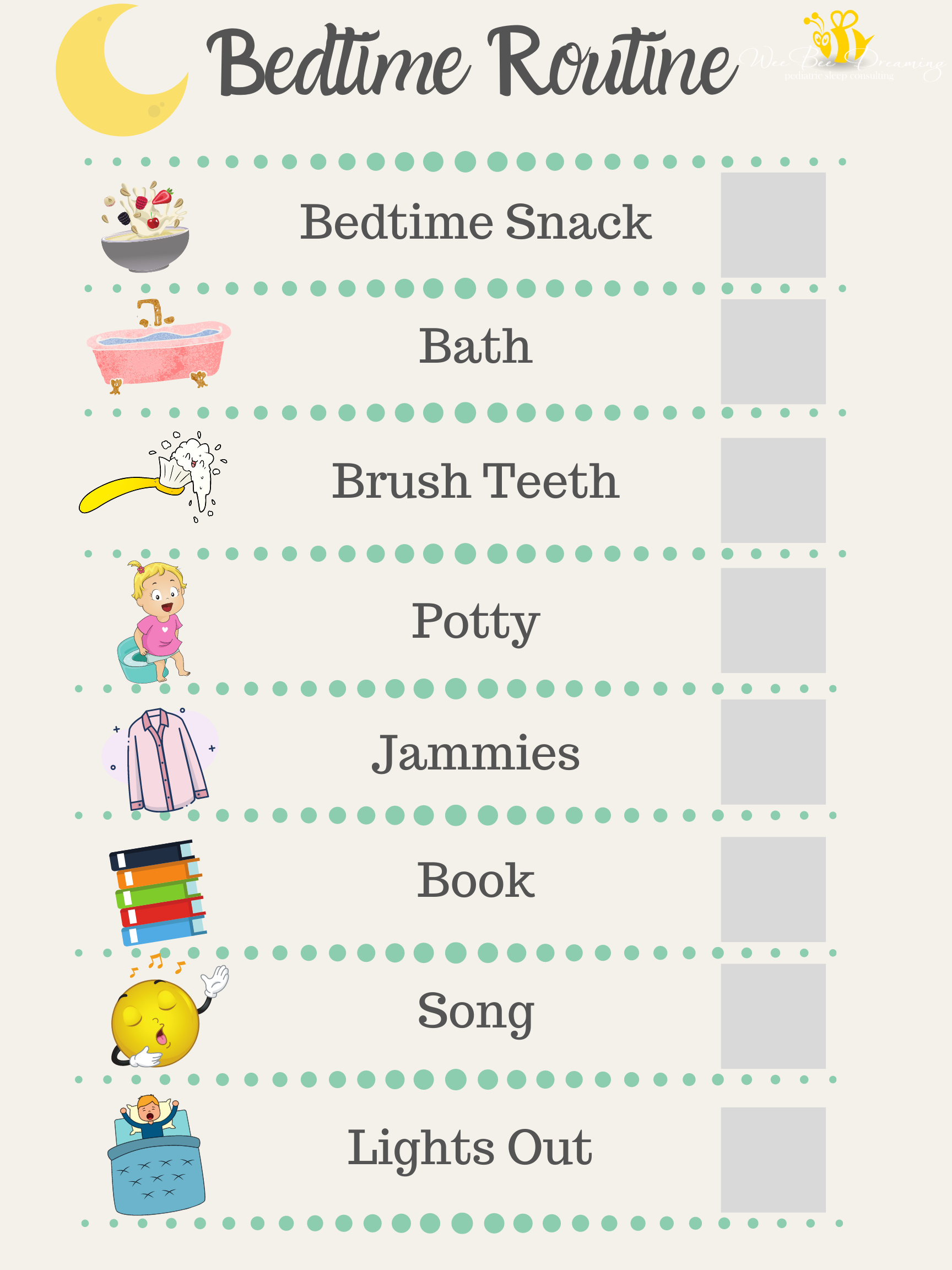
We need an extremely predictable routine. We need the same number of books, the same number of songs, the same number of hugs – you name it. The routine also needs a clear and defined end [whether it’s a song, a key phrase, or something else]. It can be helpful to create a bedtime chart [hello Pinterest!] as a visual so that your toddler can follow along with the routine, maybe even putting a sticker on each step as you go along.
We need a response when the boundary is pushed. Once you’ve decided on the limits, now it’s holding that limit. If one more book is requested, we answer simply “We read two books at bedtime. I know you want another. We’ll read more tomorrow.” No long and drawn out explanations, no debate, no negotiations.
If they have protested once you leave the room, this is often an escalation because they sense some uncertainty. Remember – boundary checking. Return to their bedroom door [you decide on how often!] for a calm, boring, repetitive reassurance, “It’s bedtime, I love you. I’ll see you in the morning.”
Fill their bucket earlier in the evening. Limit testing happens because kids are kids. But sometimes it happens because their emotional bucket needs some topping up. Kids need time with you when you’re emotionally present. Limit testing is an effective way to get your undivided attention, because negative attention is still attention. Filling their bucket involves something your toddler is interested in – reading books, playing outside, chase and tickle, etc. – and giving them their full attention while you’re doing it. Carve out a small moment in the evening before bedtime, even if it’s just 5 minutes. That is an investment that will pay off in the sleep department.
Let your toddler drive the bedtime routine. Give them lots of choices. Do you want to brush your teeth first or take a bath first? What song do you want to sing? Do you want the red jammies or blue jammies? The last step in the routine should be “Mom or Dad says good night and leaves”. Commit firmly to that plan, otherwise, bedtime devolves into a long bout of limit testing.
Expect good nights and more difficult nights. Especially if you’ve previously ‘caved’ on your boundaries, the behavior will often get worse before it gets better. This doesn’t mean it’s not working; it just means that they are checking if their ‘ways’ still work. The more consistent we are, the less pushback we see. Remember, they are not trying to control you. They’re trying to avoid separation and loss of control. Your job isn’t to bulldoze those feelings. You are their sturdy leader. You are confident, warm, loving. You are the calm in their rough seas. Long lectures, getting angry, inconsistent rules and idle threats will not work. And losing your independent sleep [and bringing in long-term habits!] for a short-term phase is never worth it.
I hope you have found these 2 year old tips helpful. If you have a child under age 1, please check out my 1 year old post here! And check back for my next posts on age 3 and 4 and if you’ve found this information helpful, please share with your friends and family!
Pam Edwards-Wipf is a Certified Infant & Child Sleep Consultant and founder of Wee Bee Dreaming Pediatric Sleep Consulting, based out of Kamloops, B.C. Healthy sleep is addicting and she has made it her life mission to help families all across the world get the sleep they deserve - a good night's sleep doesn't have to be a dream!